
Kansai, western Honshu
Kyoto
Kyoto is where Japan's temples, wooden streets and tea culture are easiest to film, and also where crowds and local rules are strictest. Hosted Kyoto days are planned around early starts and evenings, with licensed guides in Gion. Expect filming limits inside many temples, and no filming in Gion's private lanes.
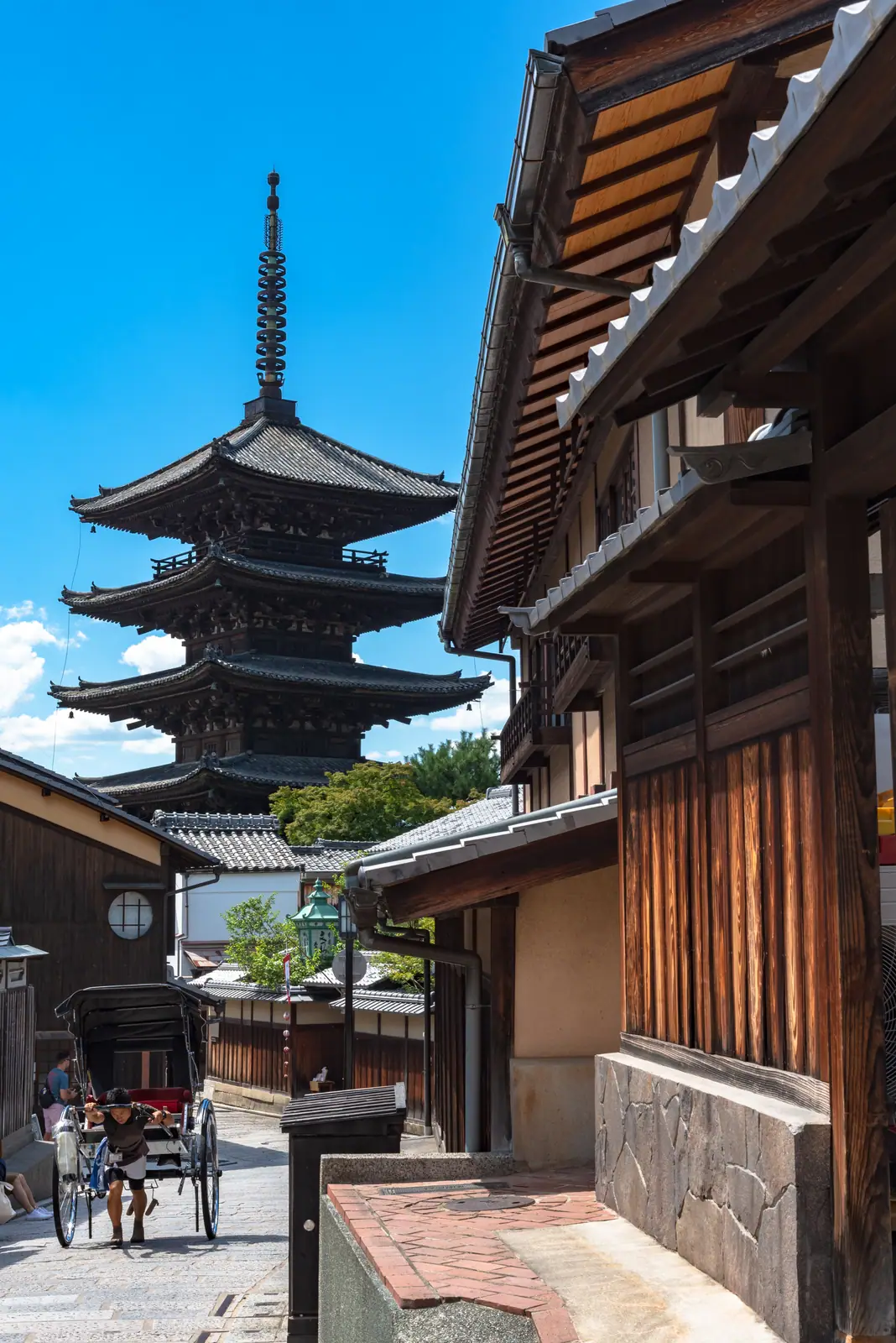
Higashiyama, Kyoto
What creators film here
Arashiyama's bamboo grove before the tour groups, the stone lanes of Higashiyama below the Yasaka pagoda, Gion as the lanterns come on, tea ceremonies and temple gardens. Kyoto content works when it is slow: long takes, ambient sound, and restraint.
When to come
Cherry blossom (usually late March to early April) and the autumn-leaf peak (typically mid-November to early December) are the most photogenic and by far the most crowded weeks, with hotel prices and availability to match. Winter mornings are cold but quiet. June and early July bring the rainy season; July and August are very hot and humid.
Getting around on a hosted trip
Kyoto's city buses get overloaded in peak seasons. Hosted activities include their own transport, so early Arashiyama starts begin with a pick-up rather than a crowded bus. Your arrival from Kansai airport, or onward from Tokyo, is agreed in your itinerary; Explera does not provide shinkansen tickets or rail passes.
Filming notes
- Private lanes in parts of Gion are closed to visitors, with signs in several languages. Stay on public streets.
- Never follow, block or film maiko and geiko without consent. Your guide will tell you what is acceptable.
- Many temples prohibit photography inside halls, and some restrict tripods in gardens. Rules differ site by site.
- Drones are not realistic in the city: permission rules for built-up areas, plus bans at most temples and parks.