
Nara Prefecture, Kansai
Nara
Nara is Japan's first permanent capital and an easy day from Kyoto or Osaka. Creators come for Todai-ji and its Great Buddha, the deer that roam Nara Park, and the lantern-lined paths to Kasuga Taisha. Arrive early for quiet frames, and treat the deer as wild animals, not props.
Todai-ji, Nara
What do creators film in Nara?
Creators film Nara for scale and calm: Todai-ji's great wooden hall and its bronze Buddha, deer crossing the park under old trees, and lantern-lined paths through the forest to Kasuga Taisha. Everything sits within walking distance, so Nara suits walking-pace content with one clear story rather than a fast montage.
- Todai-ji: the Nandaimon gate with its guardian figures, the approach across the park, and the Great Buddha Hall, whose size is easiest to show with people in frame for scale.
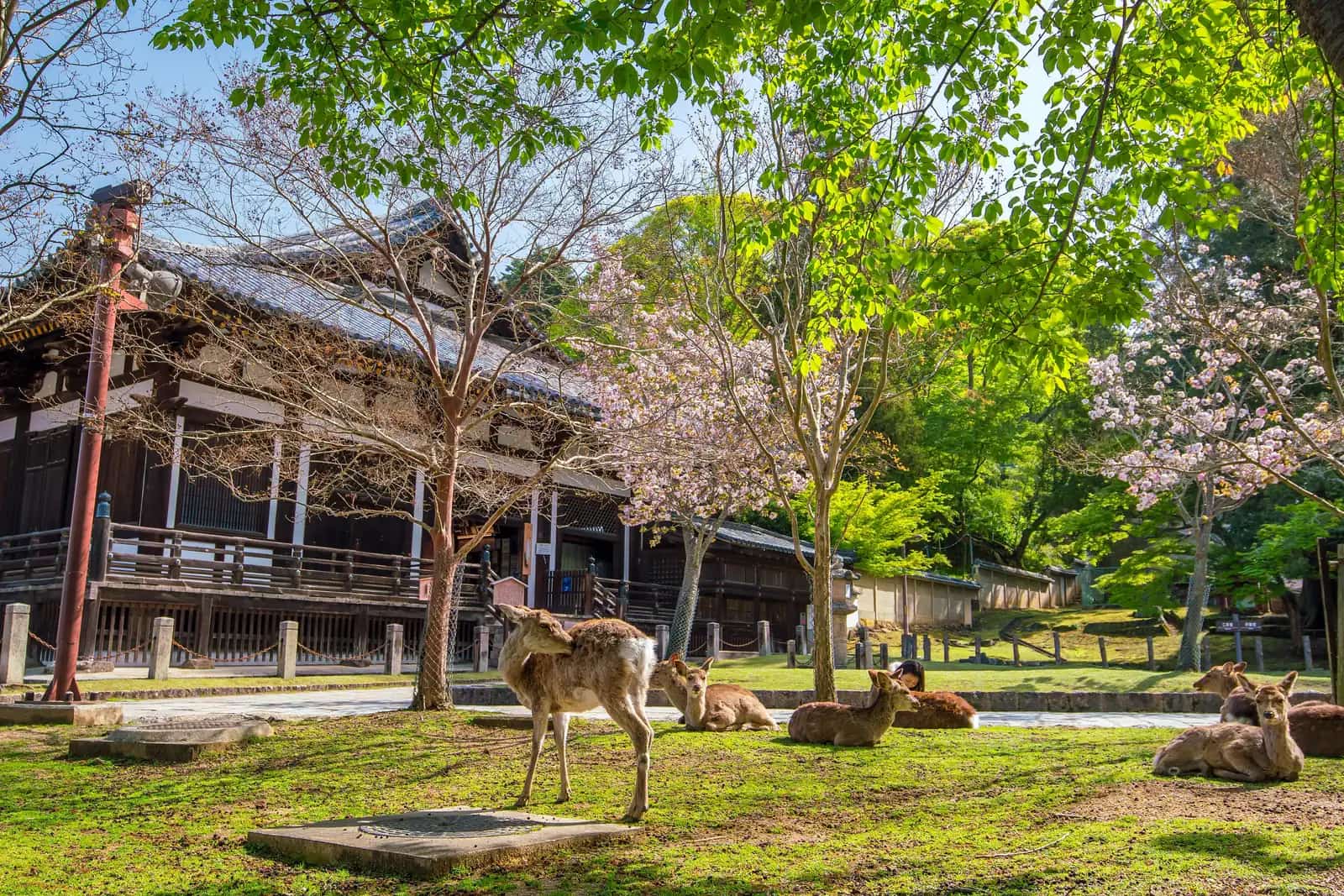
- Nara Park: deer under the trees and on the lawns, including the bowing that visitors come to see.
- Kasuga Taisha: stone lanterns along the forest approach and bronze lanterns at the shrine buildings.
- Nigatsu-do: a hall on the hillside above Todai-ji with a view over the city roofs, good in late-afternoon light.
- Naramachi: old merchant houses with lattice fronts, small cafes and craft shops, for a quieter second half.
When is the best time to film in Nara?
Early morning is the best time to film Nara in any season, because the park and the Todai-ji approach fill with school groups and day-trippers from mid-morning. Arriving early gives you the deer, the paths and the gate without a crowd.
- Spring: cherry blossom in the park and around the temples, and busy weekends.
- Summer: humid, with summer evening lantern events that light up the park. Take water and plan shade.
- Autumn: maple and ginkgo colour, clear light and heavy weekend crowds. It is also the season when stags are more aggressive, so keep a greater distance.
- Winter: cold, quiet mornings and low light that suits the temple architecture.
What does a hosted day in Nara look like?
A hosted Nara day is usually a half day or full day from a Kyoto or Osaka hotel, starting early and covered on foot. A typical day begins at the park as it wakes up, reaches Todai-ji before the main crowds, climbs to Nigatsu-do for the view, walks the lantern path to Kasuga Taisha and finishes in Naramachi. The transport that is part of the hosted day is included; meals outside it are yours.
Getting around Nara on a hosted trip
Nara is under an hour by train from Kyoto or Osaka, and once there you walk. Kintetsu Nara station is closer to the park than JR Nara, which matters with a camera bag. An IC card covers the trains. The main sights are close together but the park is hilly in places, so pack light and wear shoes you can walk in all day.
How do I film the deer in Nara safely?
Treat Nara's deer as wild animals: they can bite, butt and chase anyone holding food. They are protected, used to people and very persistent around crackers, which makes for good footage and occasional bruises.
- Feed them only the crackers sold for them in the park, and hold nothing else edible in your hands.
- Once your crackers are gone, show your empty hands; the deer usually lose interest.
- Keep a clear distance from stags in autumn and from does with fawns in early summer.
- Take particular care filming children close to deer. A deer that looks calm can push hard.
- Do not chase deer for a shot or tempt them into a frame with food you will not give them.
Etiquette and filming rules in Nara
Photography rules inside temple halls differ by site, so follow the signs and your guide. The approach paths to Todai-ji and Kasuga Taisha are narrow at busy times, so keep tripods off them. Drones are generally not permitted in the park and temple grounds; check current rules for the site and date before assuming otherwise. Some buildings undergo long restorations, and Kofuku-ji's five-storey pagoda has been under one, so check before planning a frame around a specific structure.
How does Nara fit a multi-stop trip?
Nara is almost always a day within a Kansai stay rather than a base of its own. It pairs with Kyoto for a heritage-heavy trip or with Osaka to balance a food-focused one. For family creators it is often the day children remember most, and for culture creators it adds an older layer of history than Kyoto.
Ready to apply for Nara?
The application saves as you go, and every applicant hears back within 5 business days.
Updated