
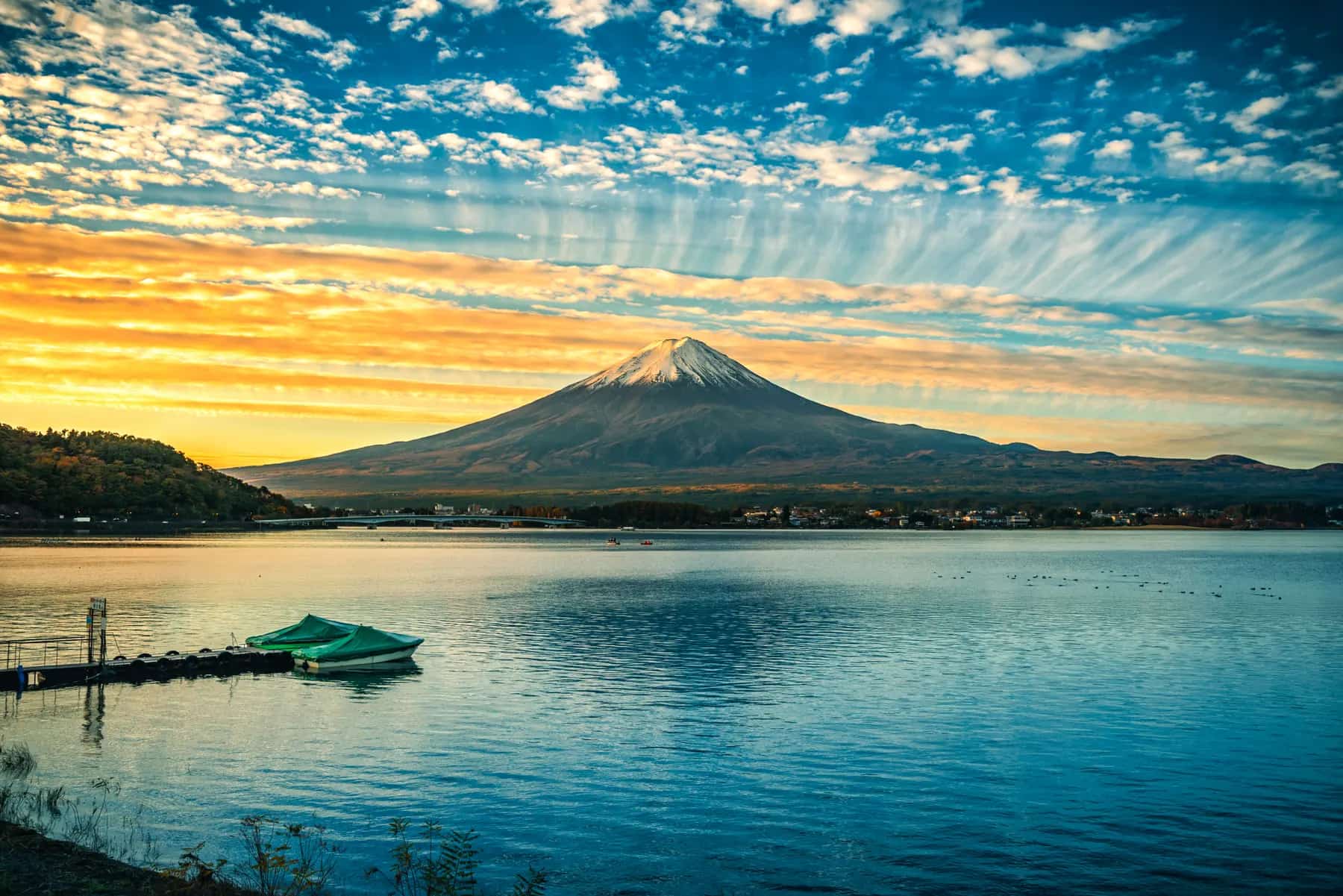
Fuji Five Lakes, Yamanashi Prefecture
Mt Fuji and Lake Kawaguchi
The Fuji Five Lakes, and Lake Kawaguchi in particular, give creators the classic views of Mt Fuji over water, pagodas and villages. The honest caveat is weather: Fuji is often hidden by cloud, especially in summer. Hosted Fuji days are planned for early mornings and a flexible date where the itinerary allows.
Mt Fuji and Lake Kawaguchi
What do creators film around Mount Fuji?
Creators come to the Fuji Five Lakes for the classic views of Mt Fuji over water, pagodas and villages, with Lake Kawaguchi as the usual base. The honest caveat is that the mountain is often hidden by cloud, so the strongest Fuji content also works on the days it does not show.
- Lake Kawaguchi: Fuji reflected in still water from the north shore in early morning, and lakeside paths with seasonal flowers.
- Chureito Pagoda: the five-storey pagoda at Arakurayama Sengen Park, framed against Fuji, reached by a long flight of steps.
- Lake Saiko and Iyashi no Sato Nenba: a reconstructed village of thatched houses with Fuji behind it on clear days.
- Fujiyoshida: streets where the mountain rises at the end of the road, some of them residential and managed for crowds.
When can you actually see Mount Fuji?
The clearest views come in the colder months, roughly late autumn to early spring, and usually in the early morning. As the day warms, cloud tends to build around the summit. Summer is humid and often hazy, and the mountain can stay hidden for days at a time.
- November to February: the best visibility and a snow-capped cone. Mornings are cold, so plan batteries and layers.
- April: cherry blossom at the Chureito Pagoda and around the lakes, with heavy crowds and traffic.
- Late April into May: flower festivals near the lakes. The Golden Week holidays bring very heavy traffic.
- July and August: the official climbing season, but often cloudy views from below. Climbing is not part of the hosted day.
- Late October to November: autumn colour around Lake Kawaguchi.
Which shots work best around Mount Fuji?
Shots that pair Fuji with a foreground layer work best: water, a pagoda, a roofline or a row of trees. The mountain alone is a postcard; a foreground makes it yours. A few patterns that hold up:
- A reflection on Lake Kawaguchi at first light, before wind ripples the water.
- The pagoda and the mountain together from the viewing deck above the steps, with seasonal colour in the foreground.
- Thatched roofs at Nenba with the summit behind them.
- A no-Fuji edit planned from the start: lakes, shrines, food and village streets that stand on their own if cloud wins.
What does a hosted Fuji day look like?
The hosted Fuji day is a full day from Tokyo, planned around the best chance of a clear morning. It usually means an early departure, lakeside viewpoints first while the air is clear, the Chureito Pagoda, and further lake or village stops before the drive back. Transport to and around the lakes is included as part of the activity, with a guide or driver-guide depending on the arrangement. Where your itinerary allows, we keep the date flexible so the day can move to a better forecast.
Getting around the Fuji Five Lakes
On the hosted day, the transport is arranged for you; it is a long day, so allow for road traffic. Lake Kawaguchi is roughly two hours from central Tokyo by road in good conditions, and longer on weekends and holidays. If you add your own time in the area, local buses link the lakes and viewpoints, and fares outside the hosted activity are yours.
Etiquette and filming rules around Mount Fuji
Respect barriers, residents and site rules: several famous Fuji viewpoints sit in ordinary streets. Local authorities have introduced measures to manage crowds at some of them, and residents are understandably tired of people standing in the road.
- Do not stand in traffic lanes or on private property for a shot, and move on when you have it.
- Drone rules vary around the lakes and shrines, many areas prohibit flights, and national rules apply on top. Check for the specific site and date and assume no drone unless confirmed.
- The Chureito Pagoda steps are steep and long. Carry only what you need.
- At shrines along the way, keep to the side of the path and do not film people praying close up.
How does Mount Fuji fit a multi-stop trip?
The Fuji day runs from Tokyo, so it slots into the Tokyo part of a trip without moving hotels. Creators with more nights often combine it with a stay in Hakone, which on clear days has its own Fuji views. For adventure and family audiences it is often the anchor day of the trip.
Ready to apply for Mt Fuji and Lake Kawaguchi?
The application saves as you go, and every applicant hears back within 5 business days.
Updated