
Kansai, western Honshu
Osaka
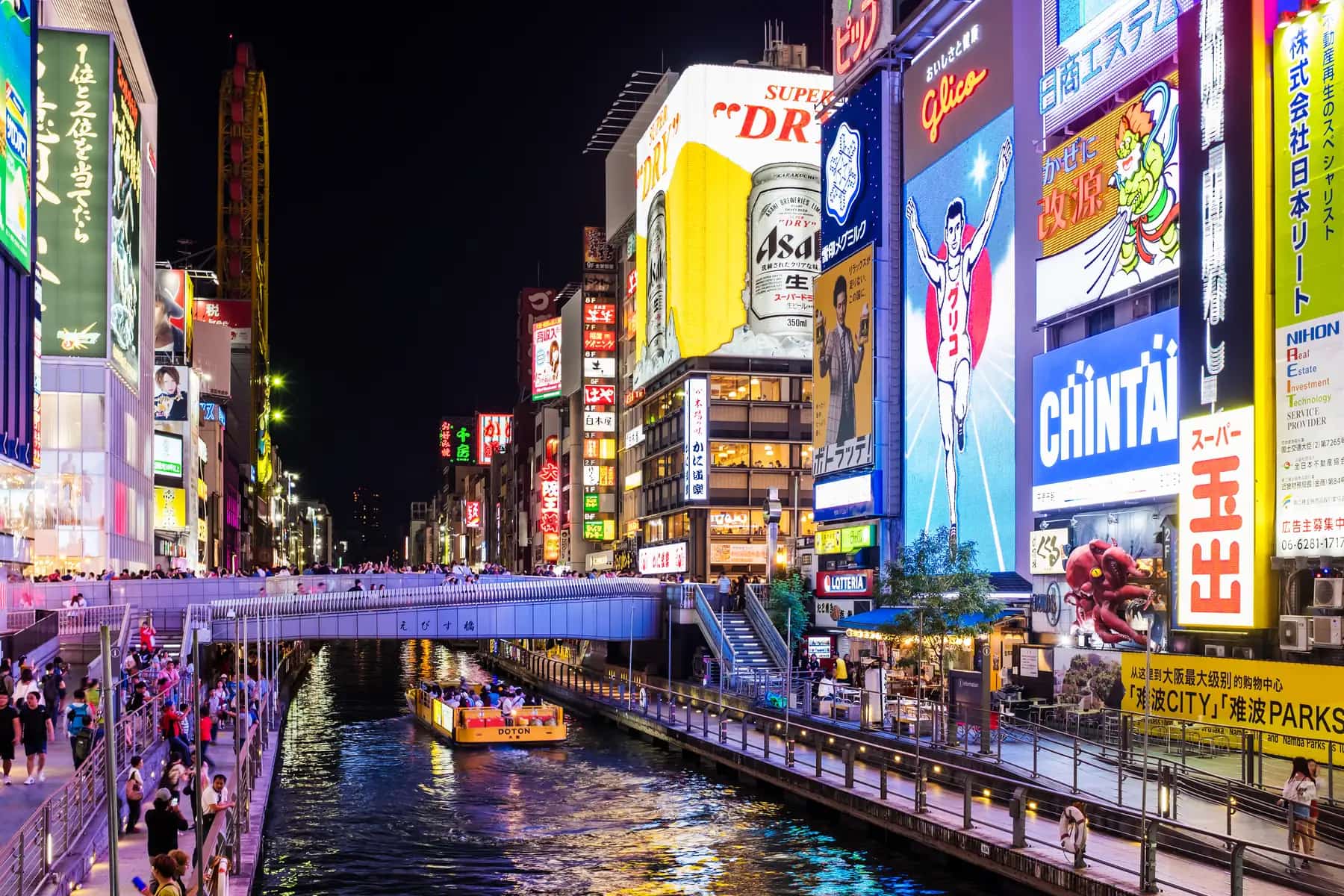
Osaka is Japan's street-food city and a practical Kansai base, with Kyoto and Nara both within easy day-trip range. Creators come for Dotonbori's neon and canal at night, takoyaki and okonomiyaki, and a louder, friendlier energy than Kyoto. Night shoots here are about crowds and light, not permits.
Dotonbori, Osaka
What do creators film in Osaka?
Creators film Osaka for food and night streets: Dotonbori's signs reflected in the canal, cooks working hotplates at small counters, and a louder, more talkative city than Kyoto. Osaka content lands best when the people behind the food get to speak, so plan for conversation as well as B-roll.
- Dotonbori and Namba: the canal, the Ebisubashi bridge and the big signs at night, with stalls and counters in the streets behind them.
- Hozenji Yokocho: a narrow stone-paved lane with a moss-covered statue and small restaurants, a calm contrast a few minutes from the neon.
- Kuromon Market: a covered market for morning food content, busiest at lunchtime.
- Shinsekai: retro streets under the Tsutenkaku tower and kushikatsu counters, where the no-double-dipping rule for the shared sauce is part of the story.
- Osaka Castle and Nakanoshima: daylight frames with moats, stone walls and riverside architecture, useful to balance a night-heavy edit.
When is the best time to film in Osaka?
Any season works for Osaka's night food content, but spring and autumn are the most comfortable for long evenings outside. Cherry blossom around the castle grounds is the busiest time; autumn is mild and dry.
- Summer: hot, humid nights that stay lively. The Tenjin Matsuri festival in late July brings boats and fireworks to the river, and very large crowds.
- Typhoon season: from late summer into autumn, storms can close outdoor stalls and disrupt trains for a day or two. Keep one evening flexible.
- Rainy season, June to early July: wet streets double the signs in reflections, which suits night shooting if your gear is covered.
- Winter: cold and dry, with long nights that give you more hours of neon.
What does a hosted day in Osaka look like?
A hosted Osaka day is weighted towards the evening. Mornings are free or used for a market or the castle; the main hosted activity is often the Dotonbori street-food night with a local guide, who introduces you to vendors, explains each dish and keeps the route moving between stalls. Food beyond the tastings in the activity is yours, which leaves you free to find your own counters on other nights.
Getting around Osaka on a hosted trip
Your arrival from Kansai airport is by private licensed vehicle; inside the city, the Midosuji subway line connects Umeda, Shinsaibashi and Namba. An IC card such as ICOCA covers trains and subways across Kansai. Kyoto and Nara are each under an hour away by train, which makes Osaka a practical hotel base for day trips. Train fares outside an included activity are yours, and late trains thin out around midnight, so plan your own return after a long night.
Etiquette and filming rules in Osaka
Ask before you film any vendor, stall or diner, and keep your gear out of walkways. Osaka is friendlier to cameras than Kyoto, but busy counters have work to do, and a refusal is final.
- Most vendors agree when asked; far fewer are happy to be filmed without being asked. Your guide can make introductions.
- Many counters seat only a handful of people. Film quickly, order, eat and give up the seat.
- Eat at or beside the stall rather than walking through crowds with food.
- The Ebisubashi bridge and canal paths are packed at night. Leave tripods behind; a gimbal or handheld rig is more practical.
- Drone flights over busy central areas generally need government permission and are rarely realistic. Check current rules for the site.
- Alcohol is legal only from 20 in Japan, including in what you show on camera.
How does Osaka fit a multi-stop trip?
Osaka works as the Kansai base for creators who want food and nightlife between heritage days: stay here, spend a morning in Nara or a day in Kyoto, and come back for the evening. Kansai airport also makes it a practical first or last stop. The food and nightlife pages cover how Osaka fits those audiences, and the deliverables page sets out what you publish afterwards.
Ready to apply for Osaka?
The application saves as you go, and every applicant hears back within 5 business days.
Updated